
Getting ready for Kindy is an exciting time for both children and families. While formal reading instruction begins at school, there are many enjoyable ways to build pre-literacy skills at home during the preschool years. These foundational skills help children develop a love of reading and set them up for success when they start school.
What are pre-literacy skills?
Pre-literacy skills are the building blocks that children need before they learn to read and write. These include understanding that print carries meaning, recognising letters and sounds, developing vocabulary, and learning how stories work. Children also develop important skills like holding a book the right way up, understanding that we read from left to right, and recognising that words are made up of individual sounds.
Making reading part of daily life
One of the most powerful ways to build pre-literacy skills is through regular shared reading. Choose a variety of books that match your child’s interests, from picture books to simple stories. Make reading interactive by asking questions about the pictures, talking about what might happen next, and relating the story to your child’s own experiences. Even spending just 10-15 minutes reading together each day can make a significant difference!
Playing with sounds and words
Children who can hear and play with the sounds in words find it easier to learn to read. Try singing songs, reciting nursery rhymes, and playing games that involve rhyming words. You might make up silly rhymes together or play “I Spy” using beginning sounds rather than colours. Clapping out syllables in words is another playful way to help children understand how words are broken down into smaller parts.
Exploring letters in everyday contexts
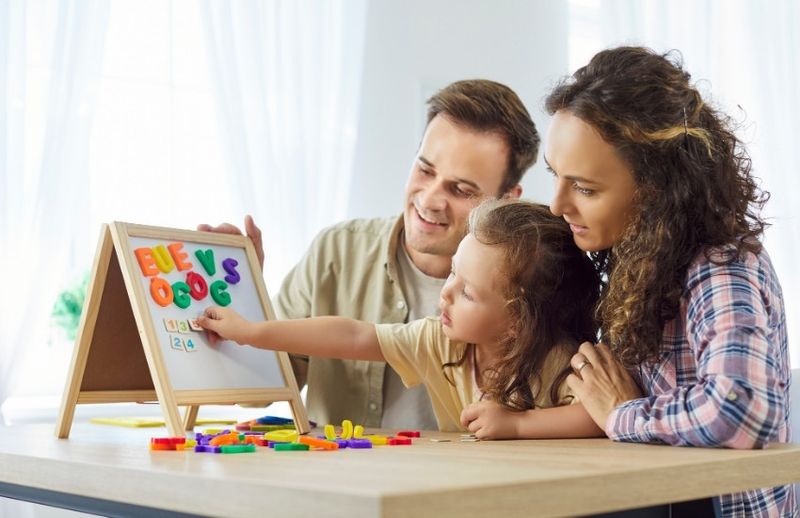
Letters are everywhere in our environment, and preschoolers can learn to recognise them through everyday activities. Point out letters on signs, food packaging, and street names during daily routines. Help your child recognise the letters in their own name first, as this is often the most meaningful starting point. You might create letter hunts around the house or use magnetic letters on the fridge to spell simple words together.
Encouraging storytelling and conversation
Rich conversations help children develop the vocabulary and language skills they need for reading comprehension. Talk with your child throughout the day about what you’re doing, what you see, and what you’re thinking. Encourage them to tell you about their day, make up stories, or explain how something works. The more words children hear and use, the better equipped they’ll be to understand those words when they encounter them in books.
Creating opportunities for writing and drawing
Before children can write letters and words, they need to develop fine motor skills and understand that marks on paper carry meaning. Provide plenty of opportunities for drawing, colouring, and scribbling. You may also offer different writing tools like crayons, markers, and chalk. Let your child see you writing shopping lists, notes, or messages, and invite them to add their own marks. As they develop, they might progress to attempting letter-like shapes and eventually writing some letters in their name.
When to seek support
Most children develop pre-literacy skills at their own pace, with wide variation being completely normal. However, if you have concerns about your child’s language development, difficulty understanding instructions, limited interest in books despite regular exposure, or challenges with recognising sounds in words, it can be helpful to speak with a professional. Early support can make a real difference.
How Inner West Paediatrics can support your child’s learning journey
For families seeking support with their child’s development and school readiness, Inner West Paediatrics offers comprehensive services tailored to each child’s needs. Our team is dedicated to providing compassionate and individualised care to support your child’s learning journey.
Reach out to the team at Inner West Paediatrics to book a consultation or learn more on (02) 9560 8905, info@innerwestpaediatrics.com.au or through our website
