Support Work at Inner West Paediatrics focuses on helping children and young people participate more confidently in everyday life.
Book an appointment arrow_forward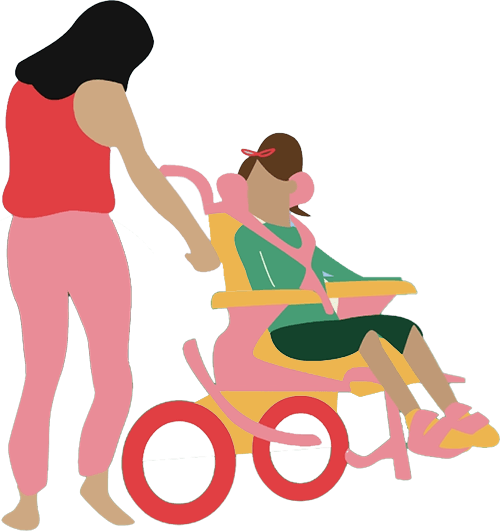


Our Support Workers (SWs) support your child at home or in the community. Support is practical, relationship-based, neuro-affirming, and guided by your child’s interests, strengths, and needs.

For example, short sessions or periods at home, and gradually expand as your child becomes more comfortable. Building trust and consistency is a key part of successful support.
Our SWs work flexibly and responsively, supporting your child to participate in the everyday activities that are important to them and your family. Where appropriate, Support Workers may work alongside your child’s therapist or Allied Health Assistant to support generalisation of skills into real-life settings. SWs do not provide therapy, assessments, or clinical recommendations.

A Support Worker provides practical, day-to-day support and assistance with participation in everyday activities. They do not assess, diagnose, or provide therapy. Therapists (e.g. Speech Pathologists, Occupational Therapists) provide clinical assessment, goal setting, and intervention plans.
Allied Health Assistants work under the direct supervision of a qualified therapist and support specific therapy goals. Support Workers focus on participation, independence, and community access rather than delivering therapy programs.
Yes. With your consent, Support Workers can collaborate with your child’s therapy team to support consistency and generalisation of skills into everyday routines. They may also be able to receive training and involvement in therapy sessions to better understand your child’s goals and support needs.
Support can occur in your home, school holidays, community settings, or during everyday activities such as outings, appointments, or recreational programs.
Session length and frequency are flexible and can be tailored to your child’s needs, goals, and funding. At Inner West Paediatrics our minimum shift length is 3 hours.
Transport can be discussed as part of planning and must align with safety requirements and funding guidelines.
At Inner West Paediatrics, you can use the following funding options to access your Support Worker:
• NDIS funding, including agency-, plan- and self-managed clients
• Self-funded
All Support Workers at Inner West Paediatrics hold a current NDIS Worker Screening Check and receive onboarding, management, and ongoing support.
Speech Pathology can help with a wide range of issues, including disordered or delayed language development, difficulty speaking clearly, stuttering, difficulty understanding or using language and difficulty with social communication.
Speech pathology also supports non-speaking individuals to access language and communication using AAC systems.
Improve speech clarity
Speech pathology can help your child speak more clearly and be understood more easily by others.
Enhance language skills and access total communication
Speech pathology can help your child improve their language skills, such as vocabulary, grammar, and comprehension. Language skills are not always spoken, and it is important that not-speaking individuals have access to a language system that works for them. Speech pathology can help with this by supporting trials of different AAC devices to find the right fit.
Increase fluency
Speech pathology can help your child overcome stuttering or other fluency disorders.
Enhance social communication
Speech pathology can help your child improve their ability to understand and use nonverbal communication, such as facial expressions and body language.
Boost self-confidence
Speech pathology can help your child feel more confident in their ability to communicate effectively, which can have a positive impact on their overall self-esteem.
Our Speech Pathologists have experience using a wide range of therapy techniques and tailor their approach to best suit your needs. As well as being fully qualified and accredited, our therapists have extensive training and experience in the following:

Want to know more about how our services can help meet your child’s needs?


